Sibanyoni told commission he had “solid facts” on a police cartel. By mid-morning the chairperson said he had none.
Taxi boss Joe “Ferrari” Sibanyoni spent Friday reading his own affidavit into the Madlanga Commission record. Each time he was asked what its central claims rested on, the answer was hearsay, a dead source, or nothing at all. He returns on 21 September to face the questioning that has not yet happened.
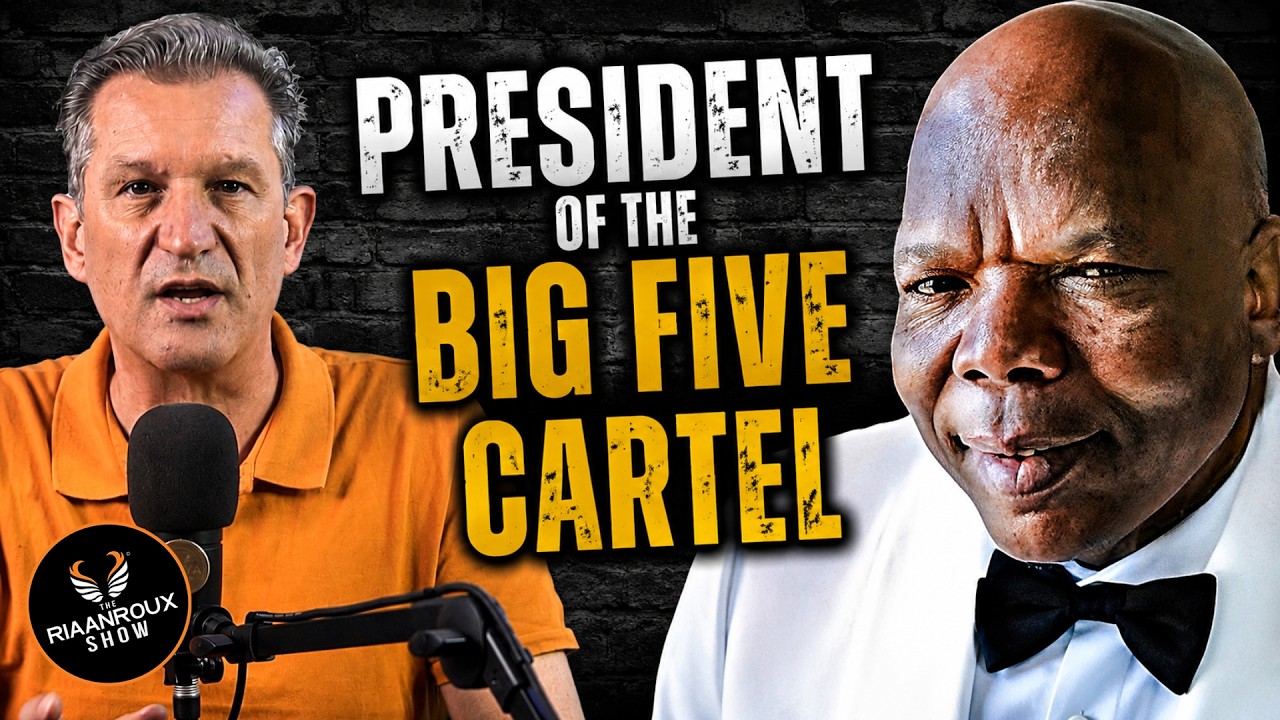
Madoda Johannes Sibanyoni, the Pretoria taxi boss widely known as Joe Ferrari, appeared before the Madlanga Commission of Inquiry on Friday, 28 August 2026, on the 169th day of hearings.
The day produced a series of striking claims. Sibanyoni told the commission he had survived two attempts on his life, that he warned the then Minister of Police about a criminal cartel operating with the help of senior police officials, and that the late Jotham “Mswazi” Msibi ran an organisation from a farm outside Pretoria whose reach extended into the Department of Transport.
What received less attention is that none of it was tested, and that several of the central assertions in his sworn statement did not survive the little questioning there was.
Friday was not cross-examination
Before Sibanyoni was sworn in, chief evidence leader Matthew Chaskalson placed the arrangement for the day on record. He told the commission that Sibanyoni would address his witness statement, that the questioning would serve to amplify and elaborate on it, and that it would not be intrusive questioning.
The reason was scheduling. Sibanyoni is due in the Delmas court on Tuesday and his legal team asked to keep Monday for preparation. By agreement between the evidence leaders and his counsel, his appearance was postponed at the end of the day to 21 September 2026.
The result is that Friday consisted of Sibanyoni reading his own affidavit aloud, section by section, for more than 5 hours, with occasional clarifying questions from Chaskalson and the panel. The substantive questioning is still to come.
Four claims that did not hold
The warning to Bheki Cele. The centrepiece of Sibanyoni’s statement is a WhatsApp message he sent to the then Minister of Police on 5 May 2022. In it he told Cele that service delivery around greater Tshwane was being disturbed by a cartel, using the words “which I have solid facts on”, and warned that very senior SAPS officials were part of that cabal.
Three months later, on 10 August 2022, gunmen opened fire on his vehicle and he was shot twice.
Asked by Chaskalson to identify the cartel and the officials, Sibanyoni could name neither. He said police were often seen at Msibi’s farm, and confirmed that no names had been given to him. Pressed on what the first-hand information consisted of, he described what he had been told by a friend who has since died.
Commissioner Sandile Khumalo suggested he might wish to deal with the questions in a different way. Chairperson Mbuyiseli Madlanga then told him that either he did not have the facts or he had them and was reluctant to share them in that forum, and that what had been given was not solid facts at all. Madlanga directed him to use the tea adjournment to consider the position with his legal representatives.
Nothing further was offered after the adjournment.
The allegation against Katiso Molefe. Paragraph 100 of Sibanyoni’s statement asserts that in 2021 and into 2022, Katiso Molefe relocated and established his criminal operations, specifically drug-related activities, at the farm owned by Msibi. Molefe is currently facing a murder charge.
Asked what the assertion rested on, Sibanyoni said it was hearsay. He said he had not been at the farm during that period and had relied on what he was told. The source, he said, was the chairman of one of his associations, a close confidant who has since died of natural causes.
Returning to the point later in the day, Chaskalson told him he found himself slightly concerned for Molefe, given that the statement makes a serious criminal allegation against a named individual. Sibanyoni accepted that the allegation exceeded the scope of his personal knowledge.
The Shongwe Commission findings. Paragraph 206 of the statement introduces findings of the Shongwe Commission, the Gauteng inquiry into taxi violence established in 2019 and chaired by retired Judge Jeremiah Buti Shongwe, and describes them as wholly consistent with and independently corroborative of Sibanyoni’s own account.
Chaskalson took him through those findings individually. On collusion between police members and those funding taxi violence, Sibanyoni said he did not know. On complainants having confidential complaints disclosed to the people they had laid charges against, he said the same. On officers protecting criminals they should have been investigating, and on planned operations leaking so that targets could avoid arrest, he said he had no personal knowledge.
Earlier in the day his own counsel, former National Director of Public Prosecutions Shaun Abrahams, had placed on record that much of this section reflected another commission’s findings rather than his client’s personal knowledge. Madlanga responded that Sibanyoni had been a player in the industry for more than 42 years.
Police proxies in the industry. The statement records that it is widely known that some taxi operators act as proxies for law enforcement officers, in breach of the National Land Transport Act. Sibanyoni confirmed he was aware of such cases but told the commission he could not identify any, saying it was a man-to-man arrangement and not easy to establish.
A statement drafted around the witness
A possible explanation surfaced late in the day, when Madlanga picked up a contradiction between page 15 of the statement, which records that Sibanyoni was raised in Kwaggafontein, and its closing paragraph, which says he was born there. He was born in Katlehong.
Sibanyoni called it a typing error and added that the drafting had been hectic, saying he was talking while others were typing.
Other features of the document point the same way. It is written in a register markedly different from Sibanyoni’s spoken answers, and it cites Constitutional Court authorities without pinpoint references, prompting Madlanga to ask counsel to supply them. Asked to explain OLAS and RAS, the two transport administration systems his own statement recommends overhauling, Sibanyoni described them as a receipt and a membership list, and Chaskalson placed the correct definitions on the record.
The statement also contains an unresolved internal contradiction about his role in the criminal trial arising from the 2022 shooting. In one passage it records that he appeared in the Gauteng High Court in Johannesburg on 20 July 2026 as the state’s first witness and testified under oath. In a later passage it describes him as a person who is yet to be a state witness against the perpetrators. Court reporting from 20 July records that the accused pleaded not guilty that day and that the state delivered its opening address, with Sibanyoni expected to take the stand when proceedings resumed.
The material that needs no corroboration
Parts of Sibanyoni’s account carry weight independently of his credibility.
He told the commission that in or around 2006 he was shot while leaving a social club at a golf estate in Pretoria North. The friend travelling with him was killed. Sibanyoni said he saw and recognised the gunman, who was associated with Msibi.
He never gave a statement to police. Asked why, he said he was afraid of Msibi. He reported what he had seen instead to the executive of his local taxi association, of which Msibi was a member. No prosecution followed. The man he identified is now dead.
His account of the 2022 sequence is similarly self-contained. He said Cele responded to his message by telephone, asking rhetorically in isiZulu what he was expected to do when people in the taxi industry were killing each other. Sibanyoni said he asked the minister to convene a dedicated taxi indaba and was refused, on the basis that nobody but him would come forward with facts. He was shot three months later.
Sibanyoni told the commission he draws no causal link between the two events and makes no such allegation, asking only that the commission note how closely they sit together.
Two meetings with Mkhwanazi
Sibanyoni’s statement originally recorded a single meeting with Lieutenant General Nhlanhla Mkhwanazi. That was corrected before he was sworn in. There were two, the first around April 2020 and the second after Msibi’s death in 2024.
He said the 2024 meeting was not sought by him but initiated by Mkhwanazi and arranged through Sergeant Fannie Nkosi. The subject, according to his statement, was the status of 5 or 6 taxi violence cases in which investigations had been completed but prosecution had stalled at the National Prosecuting Authority.
His account of the meeting is favourable. He said Mkhwanazi listened, asked questions and took extensive notes, and that this was the first occasion on which a senior law enforcement official had responded to his concerns with the diligence they deserved. He said that afterwards there was visible movement on the prosecutions and a reduction in the intensity of taxi killings, while acknowledging he could not attribute those outcomes to Mkhwanazi alone.
He also recorded what he called the irony of his position, noting that the general whose public allegations on 6 July 2025 led to the establishment of this commission had personally sought his assistance a year earlier.
Sibanyoni denied making any payment to Nkosi, to Major General Feroz Khan, to Mkhwanazi or to suspended Deputy National Commissioner Shadrack Sibiya. He confirmed that Nkosi visited his home on approximately 12 occasions, that he received a message at around 2am referring to Special Task Force movement, and that he received a message reading “Laduma”, which he described as the ordinary football expression. He said he acted on none of it.
Nkosi gave evidence to the commission in March 2026 and was subsequently arrested.
The trap set for 21 September
The most consequential exchange of the day came near its end.
Sibanyoni’s statement asserts repeatedly that he has never committed an unlawful act and has never been convicted of any offence. It also invokes his right against self-incrimination under section 35(3) of the Constitution in respect of every question touching the Delmas charges, and asks the commission to grant him use immunity.
Chaskalson told him the commission has no power to grant use immunity. He then put it to Sibanyoni that the two positions cannot stand together, because invoking the privilege requires a tacit acceptance that there is an offence of which the witness might be convicted, and Sibanyoni maintains there is none.
Chaskalson placed on record that he intends to press exactly that point when Sibanyoni returns, and asked his legal team to prepare accordingly. Abrahams said legal submissions would be made at the appropriate time.
Background
Sibanyoni is president of the South African Local and Long Distance Taxi and Bus Organisation, a position he assumed after Msibi’s death in 2024. He told the commission he has been in business for more than 42 years and employs approximately 250 people.