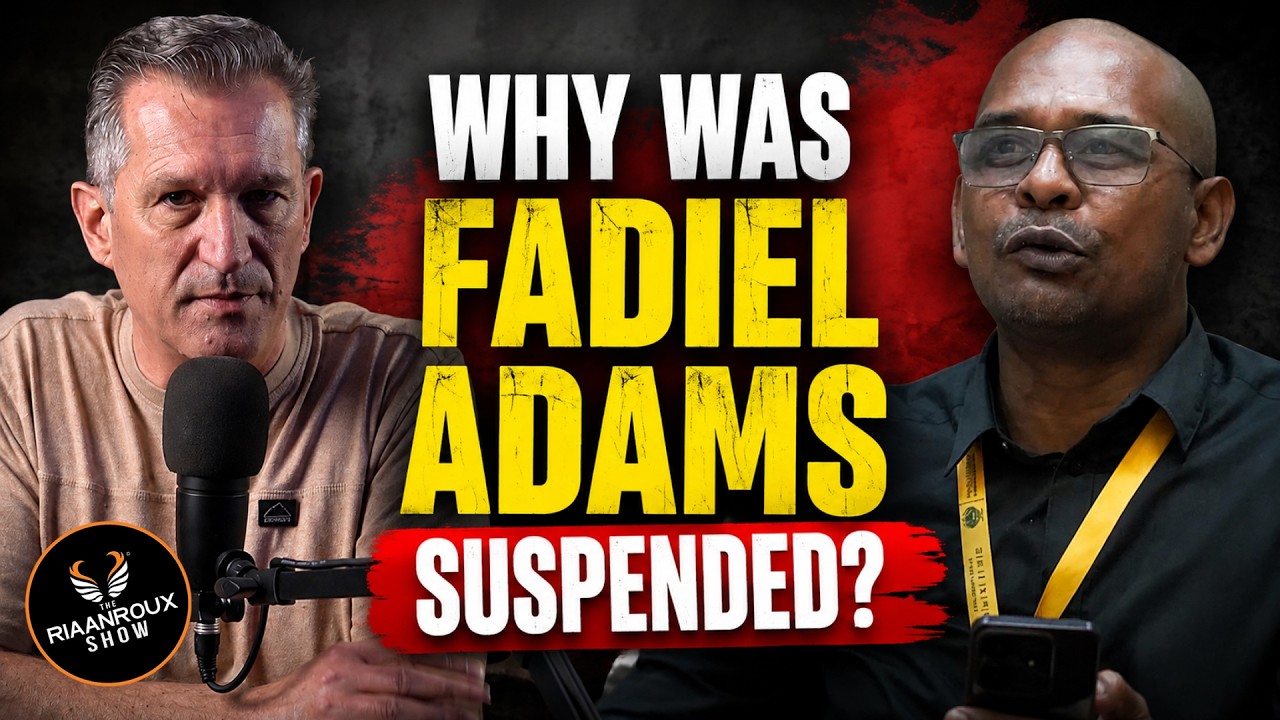
Adams Files Madlanga Affidavit After 9pm, Hours Before He Was Due to Testify
National Coloured Congress leader and MP Fadiel Adams was scheduled to take the witness stand at the Madlanga Commission on the morning of 11 August 2026. Commission spokesperson Jeremy Michaels said the sworn affidavit and its annexures only reached the commission after 9pm the previous evening. Adams was first served with a Rule 3 notice on 3 October 2025, and his appearance date was confirmed publicly at a media briefing on 31 July. The late filing raises a question the commission’s own rules appear ill equipped to answer.
Fadiel Adams was due at the Brigitte Mabandla Justice College in Pretoria on the morning of 11 August 2026, where the Judicial Commission of Inquiry into criminality, political interference and corruption in the Criminal Justice System resumed at 09:30.
Michaels said the commission received his sworn affidavit and the related annexures only after 9pm on the evening of Monday 10 August.
Adams is not a peripheral witness. He is the original Section 27 complainant whose referral to the Investigating Directorate Against Corruption set in motion the investigation into senior Crime Intelligence officials, including divisional commissioner Lieutenant General Dumisani Khumalo. That referral, and how IDAC came to obtain it, has occupied the commission for weeks.
What Adams knew, and when
The commission first served Adams with a Rule 3 notice on 3 October 2025. Correspondence ran between him and the commission’s legal team for months afterwards.
Michaels confirmed the 11 August date publicly at a media briefing on Friday 31 July, telling reporters there had been back and forth correspondence with Adams and that he could now confirm the appearance.
That gave Adams and his legal team 11 days from the public confirmation, and the better part of 10 months from the notice itself.
What a late filing costs
An affidavit filed at that hour cannot be worked with. Evidence leaders must read the statement, work through every annexure, cross-reference the contents against months of testimony from other witnesses, and then build their questioning around it.
That leaves the commission with 2 practical options. It loses the sitting day, or it finds a substitute witness at short notice who is both prepared and available. The venue is booked and the legal teams are paid whether evidence is led or not.
The case for Adams
There is a reasonable explanation available, and it deserves to be stated.
Adams is not a lawyer, and the affidavit has to account for events running from November 2024 to the present while the ground beneath him keeps shifting. In the past fortnight the commission heard evidence disputing whether A1 statements attributed to him and commissioned by IDAC chief investigator Dylan Perumal on 6 January 2025 are genuine at all. A witness whose own documents are in dispute has an affidavit that keeps changing.
Adams is also an accused person in a separate matter. He was arrested by the Political Killings Task Team on 5 May 2026 over alleged interference in the investigation into the 2017 murder of former ANC Youth League secretary general Sindiso Magaqa, charged with fraud and defeating or obstructing the course of justice, and released on R10,000 bail on 15 May. Anything he says on oath at the commission can find its way into that prosecution. Parliament then suspended him in early August under the Powers, Privileges and Immunities of Parliament and Provincial Legislatures Act.
Any competent legal team would take its time. What none of that explains is why no request for more time was made in writing a week earlier. The commission has granted postponements before, and has done so on the record.
The accountability gap
The commission’s powers are aimed at witnesses who refuse to attend or refuse to answer. Adams did neither. He complied, but so late that the compliance carried no practical value.
On my reading, nothing in the framework governing this inquiry deals with a witness who files on time in the technical sense and useless in every other sense. I would welcome a correction from anyone who works in this area.
A pattern on the calendar
The wider pattern is worth noting. Much of the resistance this commission has met has come through the diary rather than the evidence.
Former IDAC head Andrea Johnson missed a scheduled appearance on a medical certificate that chairperson Mbuyiseli Madlanga described as one of the more useless he had seen. She stood down early on 2 consecutive sitting days, citing the effects of medication. Businessman Suleiman Carrim was ruled medically unfit to testify days before a return date. Now an affidavit arriving after 9pm.
Each of those has its own explanation. Placed alongside one another, they show where the friction in this inquiry actually sits.
There is a further symmetry. The IDAC thread began with an Adams document that arrived out of sequence, solicited by Perumal, appearing to have been signed in Cape Town but bearing an IDAC Pretoria commissioning stamp, and carrying 9 additional names that nobody at IDAC has been able to account for.
The story of Adams and his paperwork has been a story about timing from the first page.
All allegations referred to are untested, and those named are presumed innocent.