Is South Africa Banned From America?
The United States announced a new visa restriction policy on 15 September 2026 that names South Africa in the heading. It is not a ban on South Africans and not one person has been named under it. What it does cover is anyone who helped make, or helps run, a law or policy that allows land to be taken without payment, treats people differently by race, or enables violence against a minority, and the wording reaches further than most of the reporting has suggested.
What was announced
US Secretary of State Marco Rubio published a statement on 15 September 2026 announcing a new visa restriction policy under Section 212(a)(3)(C) of the American Immigration and Nationality Act. That section lets the Secretary of State refuse entry to a foreigner whose presence would have serious adverse foreign policy consequences for the United States.
There is no court involved, no hearing and nothing to appeal to.
The policy covers foreign nationals who are responsible for, or complicit in, the enactment or implementation of laws or policies that enable uncompensated land seizures, race-based discrimination, or the incitement of imminent violence against members of minority ethnic or racial groups in South Africa. Certain family members may be covered too.
Reuters confirmed that the statement did not identify any person by name.
Who it actually reaches
There are 2 questions in that wording, and both have to be a yes.
The first is whether a person helped make, or helps run, an actual law or an official policy. Not an opinion, not a speech, not how someone votes.
The second is whether that law or policy makes it possible for land to be taken without payment, for people to be treated differently by race, or for people to be pushed towards violence against a minority group. Any 1 of the 3 is enough.
The word the statement uses is enable. The law does not have to have taken any land. It only has to make it possible. That matters for the standing response from the ANC-led government, which is that no land has been taken under the Expropriation Act. That is true, and it is not an answer, because the Americans have not said any has.
Where the line falls
The laws the statement describes are ANC laws. Employment equity, B-BBEE, the racial scoring applied to government tenders and the Expropriation Act all came out of ANC governments and were passed by ANC votes. The Institute of Race Relations counts roughly 145 laws on the statute book that operate by race.
Employment and Labour enforces the racial targets. Minister Nomakhosazana Meth signed the sectoral determination herself in April 2025, setting 5 year racial targets industry by industry, and has defended them through 2 court rulings so far. Trade, Industry and Competition runs B-BBEE and the codes, and the B-BBEE Commission sits under Minister Parks Tau.
The statement does not name a party. It describes conduct, and that is where it stops being simple.
The Expropriation Act names one person, the Minister of Public Works and Infrastructure, as the expropriating authority. That is Dean Macpherson of the DA, whose own party is taking the Act to court and who has said publicly that nobody in South Africa is going to have land confiscated.
Every national department applies employment equity targets because the law requires it. Agriculture is Willie Aucamp of the DA. Basic Education is Siviwe Gwarube of the DA. On the plain wording, a company applying ownership and equity targets is putting a race-based policy into practice as well, even though it never wrote the law and has no choice about complying.
What it means for travel
For almost every South African, nothing changes. There is no new requirement and no country-wide restriction.
For anyone who does fall inside the wording there are 4 points where it would show up. A new visa application refused, with no reason given, because American visa records are confidential by law. A renewal refused the same way. An existing visa cancelled without notice, which applies to the 10 year visas many South Africans hold. And refusal of entry at an American airport even with a valid visa in hand.
There is no appeal at any of those points, and there is no way to check in advance. No list has been published, and the United States does not disclose who it restricts.
This did not start in September
Rubio’s statement points back to Executive Order 14204, signed by President Trump on 7 February 2025 and titled Addressing Egregious Actions of the Republic of South Africa. That order named the Expropriation Act 13 of 2024 and said it followed policies designed to dismantle equal opportunity in employment, education and business. It cut American aid to South Africa and created the refugee programme for Afrikaners.
In June 2026 the United States ended its HIV funding to South Africa and, according to reporting at the time, attached 5 conditions covering exemptions for American companies, condemnation of incitement, expropriation safeguards, rural crime resourcing and non-interference with the refugee programme.
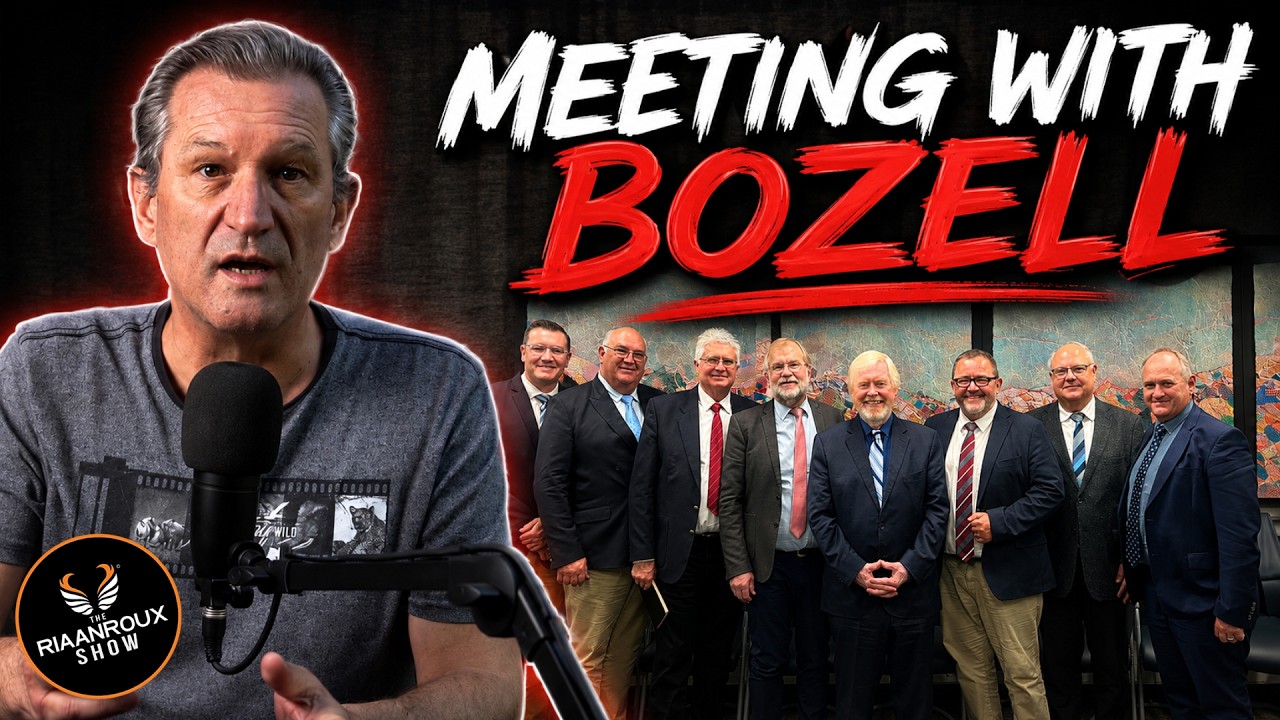
On 26 August 2026 the American ambassador, Leo Brent Bozell, delivered a message from Trump to President Ramaphosa in person. On 10 September the Presidency said a reply was coming but would not give a date. The visa policy followed on 15 September.
Rubio’s statement says the South African government has not adequately addressed the previously laid out concerns, and closes by saying the United States once again strongly urges it to act quickly.
What comes next
At half past 7 on the morning of 16 September, Bozell posted that the time for endless dialogue had run its course, that the consequences would necessarily be severe, and that this visa restriction policy is only the first step in a series of escalatory measures.
Nobody has been restricted yet and nobody has been designated. That is what a first step looks like, and the ambassador has now said plainly that the room to answer is closing.