Mkhwanazi vowed to fight until the end. A year later, nobody can say where the end is
It is exactly 1 year since Lieutenant General Nhlanhla Mkhwanazi’s briefing set off 2 parallel investigations into the criminal justice system. Around 13 people have been arrested, the national police commissioner is suspended and criminally charged, and 2 interim reports sit unread on the President’s desk. A witness has been murdered, and another was shot days before he was due to give evidence. The central question raised on 6 July 2025 remains unanswered.
On 6 July 2025, KwaZulu-Natal police commissioner Lieutenant General Nhlanhla Mkhwanazi, dressed in camouflage and flanked by masked officers carrying rifles, accused then police minister Senzo Mchunu of disbanding the Political Killings Task Team in the service of a Gauteng-based drug cartel. He said the cartel had reached into politicians, the police, prosecutors and judicial officers, and he vowed to fight the matter to its end.
He presented little hard evidence that afternoon. The claims landed anyway, on ground prepared by years of corruption scandals and a crime rate most South Africans experience as daily reality rather than statistics.
The institutional response was quick by the standards of this administration. On 13 July, President Cyril Ramaphosa placed Mchunu on special leave, appointed Firoz Cachalia to act as police minister, and announced a commission of inquiry under retired Constitutional Court justice Mbuyiseli Madlanga. On 23 July, Parliament established its own ad hoc committee. By October, both bodies were hearing evidence from largely the same cast of witnesses.
What the year established
The strongest finding of the year concerns the disbandment itself. Mchunu issued the directive on New Year’s Eve 2024, while national commissioner Fannie Masemola was on leave, and it ordered the team dissolved immediately. The ad hoc committee’s evidence leaders, led by advocate Norman Arendse SC, examined Mchunu’s stated reasons and reported that a credible evidentiary basis existed to infer the task team was shut down because of its success in helping expose a criminal syndicate involving law enforcement officials, and that the operational and budgetary justifications only surfaced after the fact.
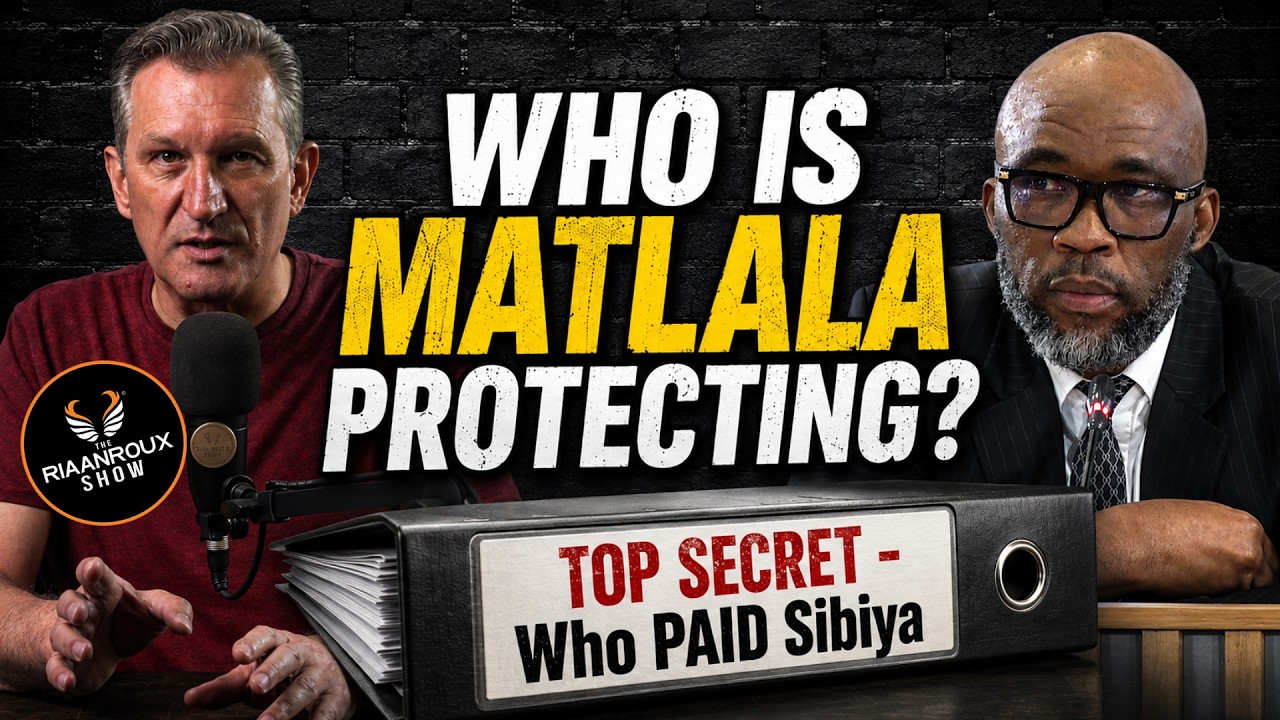
The alleged Big 5 Cartel supplied the year’s second major theme. Vusimuzi “Cat” Matlala, allegedly an operative in that world, held a policing contract worth R228 million, and Masemola’s alleged failure to stop it is why the national commissioner was criminally charged on 21 April, suspended 2 days later, and appeared in court alongside Matlala on 13 May. Lieutenant General Puleng Dimpane now acts as national commissioner, and at her appointment Ramaphosa said procurement had been identified as the source of corruption, abuse of office and instability within the police service. That is the presidency conceding the problem is structural rather than a matter of individual officers.
The third theme drew less public attention but may explain more of the conflict than the other 2 combined: control of Crime Intelligence’s secret service fund. Arendse remarked during the hearings that the fight inside the police appeared to be about exactly that. Every attempt to scrutinise Crime Intelligence head Lieutenant General Dumisani Khumalo and the fund’s spending, including property purchases allegedly made at inflated prices, drew fire from Mkhwanazi, whether it came from the media, MPs, the Investigating Directorate Against Corruption or the Inspector-General of Intelligence. The Inspector-General, Imtiaz Fazel, has since been suspended. IDAC head Andrea Johnson told Parliament there was no truth to the claim that her directorate was running a witch-hunt against particular officers.
The cost
The year also produced a body count. In early December, Marius van der Merwe, who gave evidence anonymously as Witness D, was shot dead outside his Brakpan home in front of his wife and children, weeks after appearing before the committee. The police identified Wiandre Pretorius as a person of interest in the killing. Pretorius later took his own life.
On 28 June, Crime Intelligence Major General Feroz Khan was shot, days before he was due to appear at the Madlanga Commission, where he was expected to face questions about, among other things, his possible ties to Pretorius. The witness shot in June was due to answer questions about the person of interest in the murder of the witness shot in December. That connection has drawn far less attention than it deserves.
2 stories, and the uncomfortable truth about both
The evidence before both investigations settles into 2 competing narratives. In the first, a group of good police officers is standing up to the Big 5 Cartel and its protectors inside the criminal justice system, with Mkhwanazi as its public face. In the second, a group of compromised officers is pointing loudly at the cartel to pull attention away from their own corruption, with the Crime Intelligence fund at the centre.
The detail few are talking about is that these narratives are not mutually exclusive. The cartel can be real while the faction exposing it is compromised, and dirty accusers do not wash the accused clean. ANC MP Khusela Diko captured the state of the evidence when Masemola appeared before the committee in March, saying that after months of allegations and counter-allegations she honestly did not know what to make of most of it.
The scoreboard
A year on, around 13 people have been arrested and the criminal cases flowing from the inquiries are still working through the courts. The Madlanga Commission has produced 2 interim reports, both for the President’s eyes only. Mchunu remains, in name, a minister, 12 months into his special leave. Masemola is suspended and in the dock. And Mkhwanazi himself has been reappointed as provincial commissioner and, in April, placed in charge of a national task team targeting organised crime. Of every figure in this saga, the man who made the allegations is the only one whose position improved.
Late in June, with IDAC once again moving on Khumalo, Mkhwanazi told broadcasters that there would be blood on the streets, and that “we are at war”. That is a serving provincial commissioner publicly threatening consequences over a lawful arrest by the state’s own anti-corruption body.
The final reports from both the commission and the committee are now weeks away. But the briefing that was meant to expose a takeover of the state has so far exposed something harder to fix: a police service where the contest over who investigates whom has become the main event, and where the public is asked to pick a hero instead of being shown the truth.