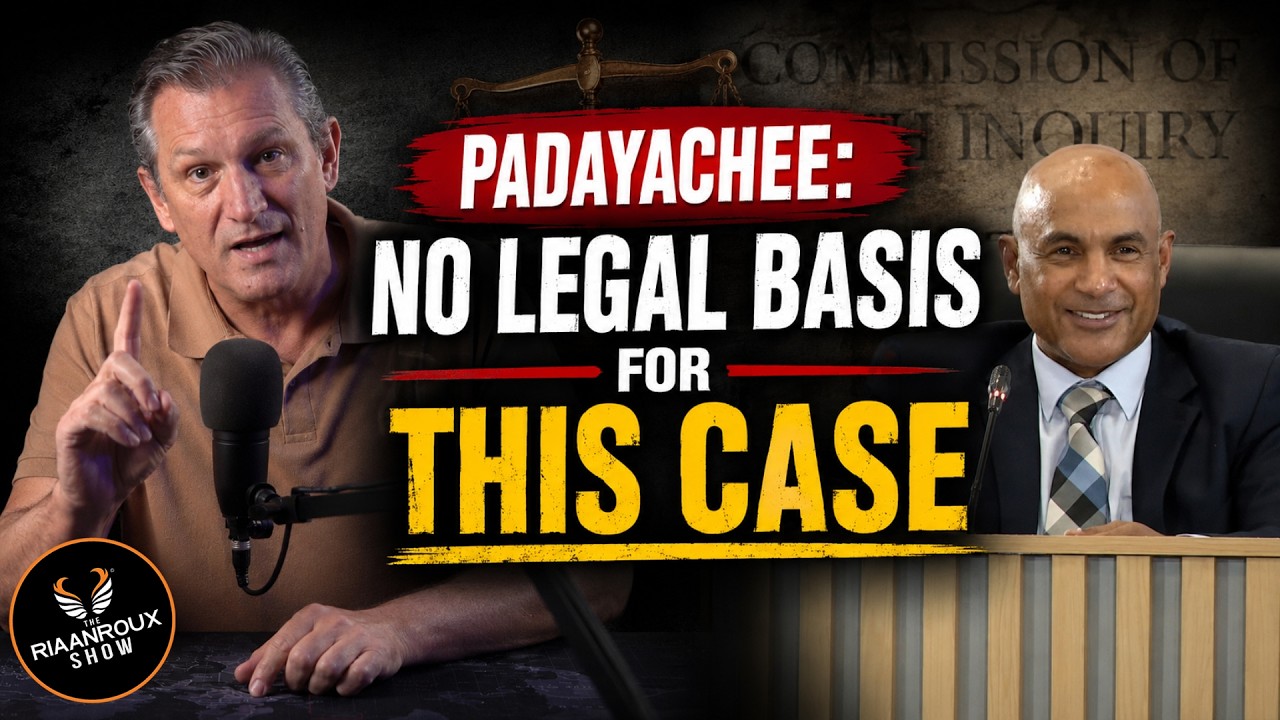
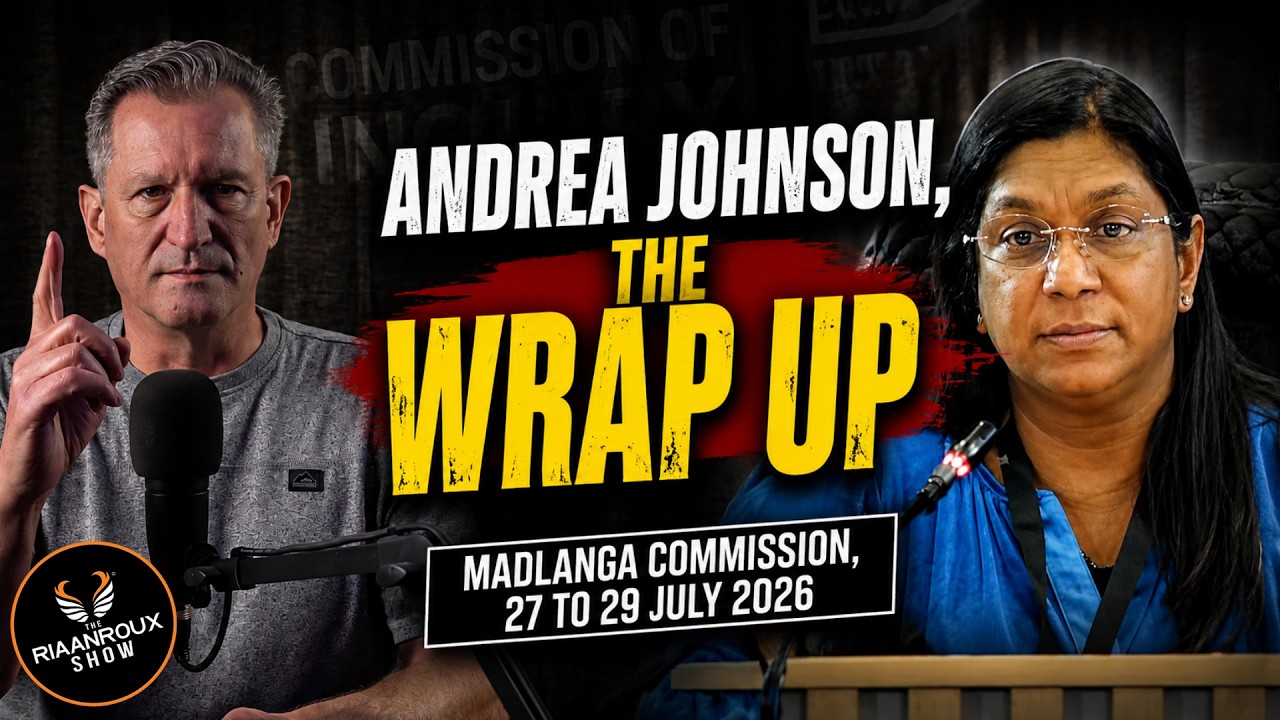
Padayachee admits he never saw the referral affidavit that opened the Khumalo investigation
IDAC senior investigator Brian Padayachee told the Madlanga Commission he never saw the section 27 referral affidavit, the document meant to give IDAC legal grounds to investigate Lieutenant General Dumisani Khumalo, until months after the arrests had already happened. The chair of the commission described the reasoning behind the investigation as a quantum leap in logic, and walked through the referral to show that its allegations rested on unsubstantiated suspicion rather than evidence. The commission also raised unresolved discrepancies in the docket’s dates, case number and signatures.
Brian Padayachee, senior investigator at the Investigating Directorate Against Corruption (IDAC), returned to the stand before the Madlanga Commission of Inquiry in Pretoria for an extended cross-examination on the legal basis for the investigation that led to the arrest of Lieutenant General Dumisani Khumalo and six co-accused.
Never saw the referral
Padayachee told the commission that when he was assigned to the investigation, he worked from a verbal briefing given by his chief criminal investigator and was not shown the section 27 referral affidavit, the document a complainant submits to trigger an IDAC investigation. He said he only saw the affidavit himself a couple of months ago, once it became an issue before the commission.
The chair put to him that not having sight of the referral did not improve his position but worsened it, since he helped build a case that led to the arrest of a Lieutenant General without ever confirming the document that started the investigation met the legal threshold required by law. Padayachee agreed, saying it “does not make sense” and that he would insist on seeing any future referral before proceeding.
A quantum leap in logic
The referral affidavit, dated 21 November 2024 and submitted by Member of Parliament Fadiel Adams, was tested paragraph by paragraph. The commission noted that its central allegations were framed as suspicion rather than fact: paragraph 5 states only that Adams “suspects” crime intelligence funds were given to a former minister, and paragraph 7 states he “suspects” Khumalo, Major General Josias Lekalakala, Major General Nozipho Madondo and others of siphoning funds from a secret service account, without setting out any supporting facts.
Padayachee conceded, when pressed on paragraph 5 specifically, that the suspicion had not been substantiated and did not meet the requirements of section 27.
The referral’s central complaint concerned the appointment of a civilian who had worked at BMW South Africa, with no policing or management experience, to head technical support services within crime intelligence. The chair noted that SAPS regularly appoints civilians with specialist skills, and that a lack of policing experience alone does not establish fraud, describing the inference drawn in the referral as a quantum leap in logic.
A further paragraph in the referral, referring to a “cover up” of an unspecified “incident” at Major General Philani Lushaba’s house, could not be explained by Padayachee with reference to the document itself. When asked to read the paragraph without drawing on what he had since learned during the investigation, he was unable to say what incident or cover up was being referred to.
Timeline and docket discrepancies
The commission set out a timeline showing gaps between the referral affidavit, dated 21 November 2024, the authorisation of a preliminary investigation on 6 December 2024, the complainant’s sworn statement only taken on 6 January 2025, and the authorisation of a full investigation on 30 May 2025, roughly five months after the preliminary investigation began.
The commission also queried irregularities in the docket itself, including a CAS number corresponding to June 2025 attached to a statement dated January 2025, a signature apparently misplaced between the sections reserved for the complainant and the investigating officer, and a Pretoria commissioning stamp on an affidavit that was signed in Cape Town. Padayachee said he could not explain the discrepancies and that chief investigator Dylan Perumal, who commissioned the affidavit, would be better placed to do so.
What comes next
Padayachee agreed to provide the commission with the written authorisations for both the preliminary and full investigations, as well as the internal document designating him to the case. IDAC head Advocate Andrea Johnson has yet to testify before the commission.