South Africa’s BAD Foreign Policy Choices
In June 2026, US Ambassador Brent Bozell publicly called out South Africa’s foreign policy after Deputy President Mashatile travelled to Beijing while Iran’s Deputy Foreign Minister visited Pretoria in the same week. The ANC’s response — that non-alignment does not mean neutrality — inadvertently confirmed Bozell’s point. This analysis examines why the ANC’s non-alignment label does not match its foreign policy behaviour, what Solidariteit’s Jaco Kleynhans identified as the real economic stakes for South African workers and farmers, and why President Ramaphosa’s constitutional defence raises a question the ANC has not answered: when South Africa’s deepening ties with Iran cost jobs, trade access, and investment, who exactly does that foreign policy serve?
In the same week that Deputy President Paul Mashatile flew to Beijing to deepen South Africa’s ties with China, Iran’s Deputy Foreign Minister sat down with South African officials in Pretoria. The timing was not a coincidence. It was a pattern. And it did not go unnoticed.
US Ambassador to South Africa Brent Bozell took to the official US Embassy X account on 24 June 2026 with a direct assessment. “Pretoria calls this non-alignment,” he wrote. “We call it what it is: a choice. The South African people deserve an honest conversation about who their government is choosing to stand with.”
That single post triggered a diplomatic exchange that has since exposed a fundamental contradiction at the heart of the ANC’s foreign policy doctrine — and raised serious questions about who pays the price when that contradiction has economic consequences.
DIRCO’s Defence and Why It Backfired
The Department of International Relations and Cooperation responded swiftly. In a formal media statement on 25 June 2026, DIRCO pushed back against what it characterised as American interference: “Non-alignment must not be conflated with neutrality. We refuse to be drawn into geopolitical contestations or be pressured to take sides. Instead, we prioritise inclusive dialogue, global peace, and our own national interests.”
The statement then added a pointed observation: “We note the inherent contradiction in being publicly scrutinised for engaging Iran and China, the very same states with which the United States itself continues to actively interact.”
On the surface this reads as a reasonable counter-argument. On closer examination it is not. By pointing out that the US also engages with Iran and China, DIRCO inadvertently confirmed that all 3 countries are making deliberate geopolitical choices. Which is precisely what Bozell argued. The non-alignment label is not a description of South Africa’s behaviour. It is a shield against scrutiny of it.
Non-alignment, as a foreign policy doctrine, has always meant something specific: you do not subordinate your foreign policy decisions to any external power’s agenda. DIRCO’s own defence strips that label bare.
What Non-Alignment Actually Means
The ANC has consistently argued that non-alignment does not mean neutrality. This is technically correct. The Non-Aligned Movement, established during the Cold War, was never about disengagement. It was about maintaining an independent foreign policy not subordinated to any bloc’s agenda.
But that distinction cuts both ways. If South Africa is deepening bilateral ties with Iran and China, the question is not whether it has the right to do so. It does. Every sovereign country does. The question is whether those relationships serve South African national interest, or whether they serve ANC ideological positioning rooted in Cold War-era loyalties the party has never updated.
Those are 2 completely different things, and the non-alignment label answers neither.
Kleynhans: The People Who Actually Pay
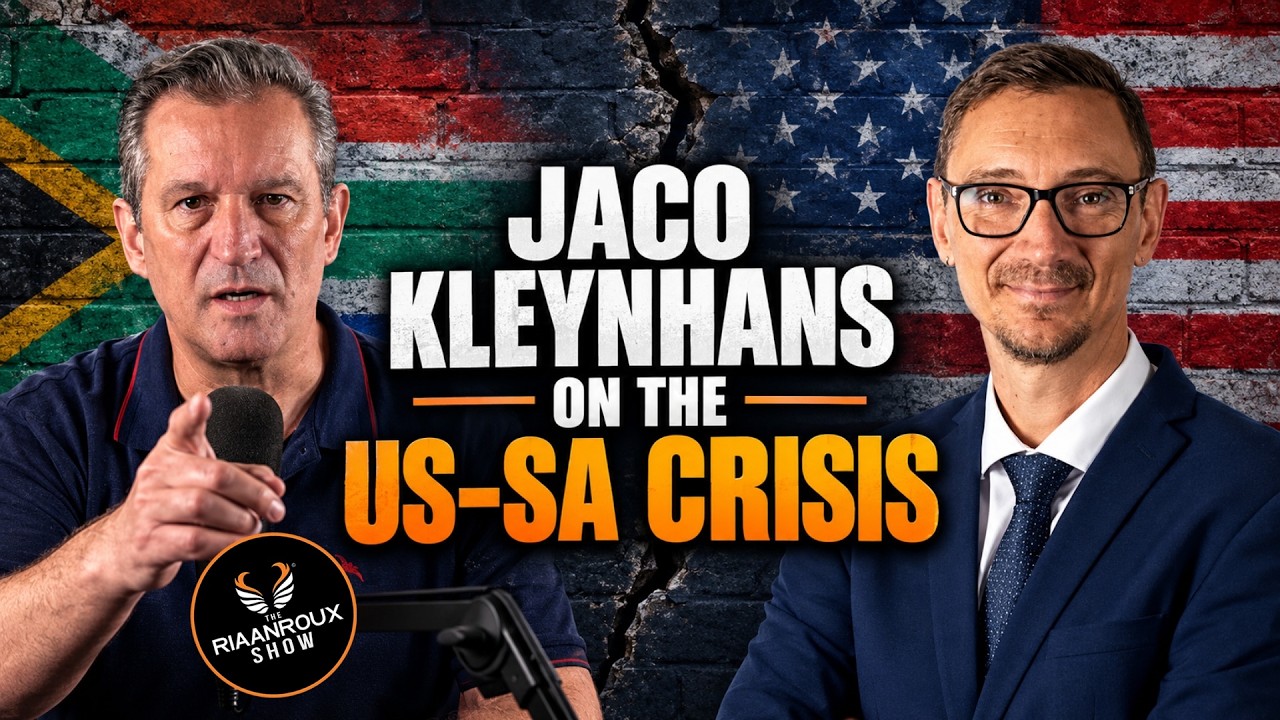
Jaco Kleynhans, head of international liaison at Solidariteit, identified the structural problem in plain terms.
“Minister Lamola says he is acting in South Africa’s interests,” Kleynhans said, “yet a further deepening of South Africa’s relationship with Iran is, in fact, contrary to the country’s interests. The question is not whether Washington dictates, or should dictate, South Africa’s foreign policy. The real question is whether an increasingly close relationship with Iran serves the economic interests of South Africans. The answer is no.”
Kleynhans went further: “When exports decline, investment is withheld and trade opportunities are lost, it is workers, manufacturers, farmers and their families who pay the price. Thousands of jobs depend on strong trade ties with the United States.”
His observation carries particular weight given the current trade environment. South Africa’s duty-free access to the US market through AGOA expires at the end of 2026 and renewal is not guaranteed. South Africa has submitted a revised trade proposal to Washington in an attempt to have 30% tariffs lifted. A formal bilateral trade agreement between the 2 countries is actively being negotiated.
Every diplomatic provocation at this moment is not an act of principle. It is a gamble with someone else’s livelihood.
Ramaphosa’s Statement and the Question It Raises
President Cyril Ramaphosa addressed the National Council of Provinces on 25 June. His statement was careful and constitutionally grounded.
“South Africa’s foreign policy is guided by our constitution which commits the republic to the promotion of human rights, peace, multilateralism and a rules based international order,” Ramaphosa said. “I’ve often said that we don’t see ourselves as a country having enemies. We are a country that seeks to be at peace with all other countries and have good relations with all. South Africa remains committed to its policy of non-alignment. This does not imply neutrality or disengagement, but rather an independent foreign policy that seeks to promote dialogue, cooperation, and peaceful resolution of global challenges.”
The statement is coherent as a constitutional position. But it does not answer the follow-up question that the week’s events demand: if South Africa engages everyone equally and sees no enemies, why does its bilateral relationship with Iran deepen at precisely the moment it causes the greatest economic damage to ordinary South Africans?
That is not balance. That is a pattern. And patterns have consequences.
The Honest Conversation South Africans Deserve
Both Ambassador Bozell and Solidariteit’s Kleynhans made the same underlying argument, approached from different directions. Neither argued that South Africa must become a satellite of American foreign policy. Both argued something simpler: if you are going to make foreign policy choices with real economic consequences, be honest about what those choices are and who they serve.
South Africa has every sovereign right to maintain relationships with Iran and China. But sovereignty is not a substitute for accountability. Labelling those relationships non-alignment does not make them so. It simply makes them harder for South Africans to scrutinise.
The ANC will not lose a single job over this. The people who will are already paying their taxes, going to work, and trusting that their government’s foreign policy serves them.
The honest conversation the US Ambassador called for is not a conversation between Pretoria and Washington. It is a conversation the ANC owes to the South African people.
The Riaan Roux Show — Don’t just know what’s happening, understand what it means.