The Report That Proved Apartheid Could Not Work, Commissioned by Apartheid Itself
In 1950 the apartheid government appointed its own commission to determine whether the homelands policy could actually work. The Tomlinson Commission answered after 5 years and 17 volumes: yes, but only at a price of £104 million in the first decade and with white capital operating inside the reserves. Hendrik Verwoerd accepted the diagnosis and rejected the price, and the state built the policy anyway. A new history of the bantustans, Fragmented Nations by Liam Richard May, puts that decision back at the centre of the story, where it belongs.
The most damaging document in the history of apartheid was not written by its opponents. It was commissioned, paid for and received by the apartheid government itself.
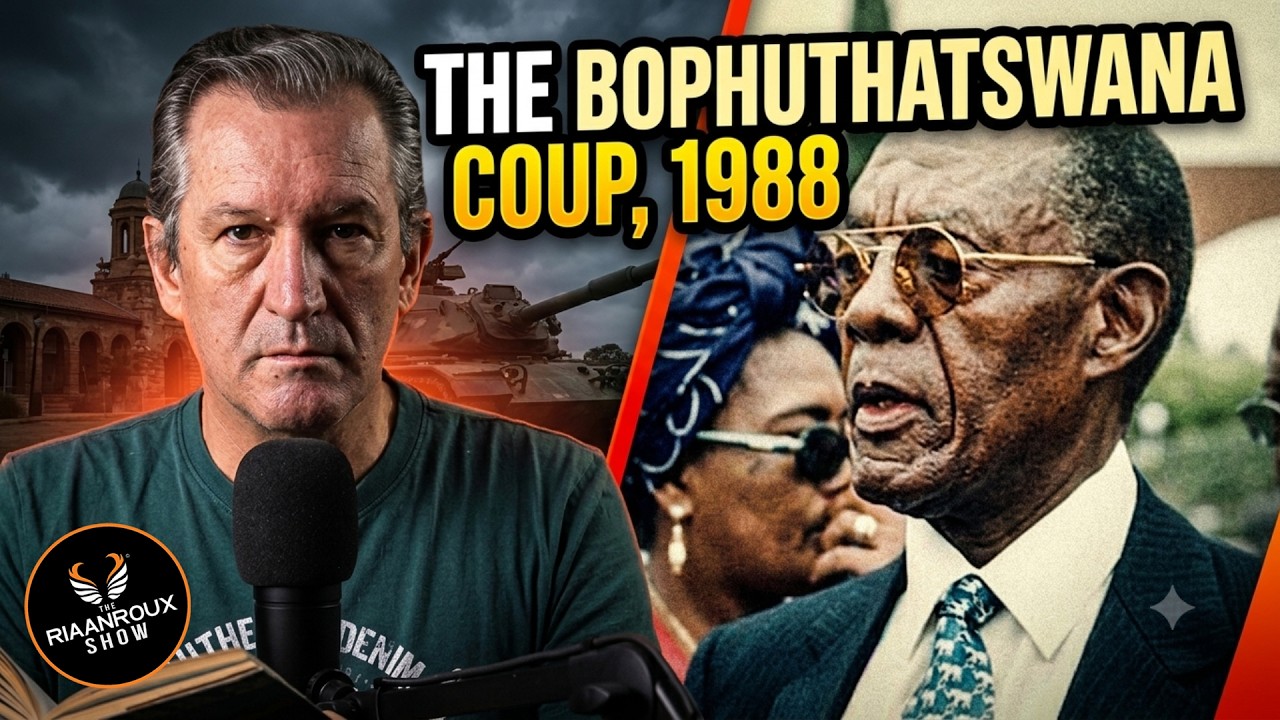
That is the thread running through Fragmented Nations: A History of the Bantustans, a new narrative history by Pretoria-based historian Liam Richard May, published under the Volkskild imprint and available as a free PDF. The book covers all 10 of the ethnic homelands the South African government created across 4 decades, and my latest video draws on it to examine the doctrine that made the whole project possible.
The doctrine deserves closer attention than popular history usually gives it. The National Party did not present the bantustans to the world as an instrument of domination. It presented them as self-determination, the same principle the decolonising world was demanding everywhere else in the 1950s and 1960s. Each African people, on the government’s argument, was a distinct nation entitled to its own territory and its own political destiny.
The argument was designed to be respectable, and for a portion of the international community it worked for years. Which is exactly why the Tomlinson Commission matters so much.
The commission, chaired by University of Pretoria agricultural economist Frederik Tomlinson, was appointed by the cabinet in 1950 to establish whether the reserves could carry the populations the policy intended to place in them. It worked for 5 years and produced 17 volumes, still the most detailed body of evidence ever assembled on the reserve territories.
Its findings were unambiguous. The reserves were severely overpopulated and severely eroded, and could not support the people already living on them. Making the homelands economically real would require £104 million of state investment in the first decade, a substantial fraction of the national budget of the day, together with white capital and technical personnel operating inside the reserves themselves.
Verwoerd’s response was the hinge of the entire homelands era. He accepted the commission’s diagnosis and its stated goal, then rejected the investment as politically unattainable and rejected internal white capital outright, on the grounds that it would compromise the principle of separation itself. What replaced it was the border industries compromise, white-owned factories placed just outside homeland boundaries, drawing cheap labour from territories that were kept poor by design.
From that point the doctrine and the reality were 2 different things. The speeches continued to promise self-determination. The budget guaranteed dependence. The territories eventually declared as nations held 13.7% of the country’s land, drawn so that the mines and the industrial heartland fell outside them, and roughly 3.5 million people were moved to make the map match the doctrine.
This is why the bantustan story matters in 2026, and not only as history. Self-determination remains live vocabulary in South African politics, claimed by movements across the political spectrum. The bantustan record offers a test for every version of the claim: who defines the community, and who carries the cost. Pretoria answered both questions on everyone else’s behalf, and the result is the structural inheritance the country is still carrying, from the unresolved land question to the position of traditional authorities in former homeland areas.
May’s book presents the strongest case the system’s defenders made before letting the documentary record answer it, an approach that treats the reader as capable of weighing evidence. The full book is free to download, and the details are in the video description.
A government that read its own evidence and then built against it had already told the country what the policy was really for.
Fragmented Nations: A History of the Bantustans by Liam Richard May, published under the Volkskild imprint.
The full book is available as a free PDF at the link below, and the author’s contact details are included so you can weigh the evidence yourself.
Free PDF of Fragmented Nations: https://drive.google.com/file/d/19NFEN7pZ5yXt_XOy5RjqbiWdB-k2WIL5/view?usp=drivesdk
Author contact and Volkskild channels: Facebook: https://www.facebook.com/share/18MxmMpbr3/
Website: https://www.lrmay.com/
WhatsApp Channel: https://whatsapp.com/channel/0029VbD1aGGL2ATuKfS6kI3e
Instagram: https://www.instagram.com/volkskild