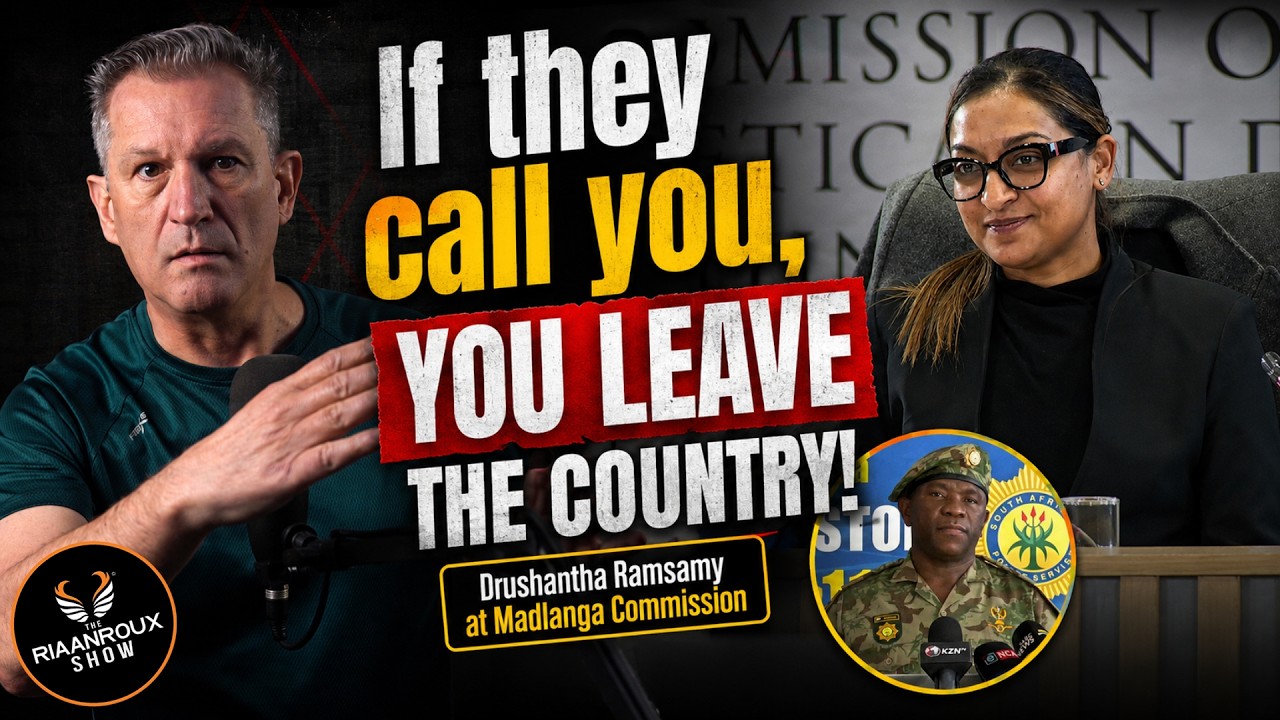
Feroz Khan: The Commission Will Not Wait For Him
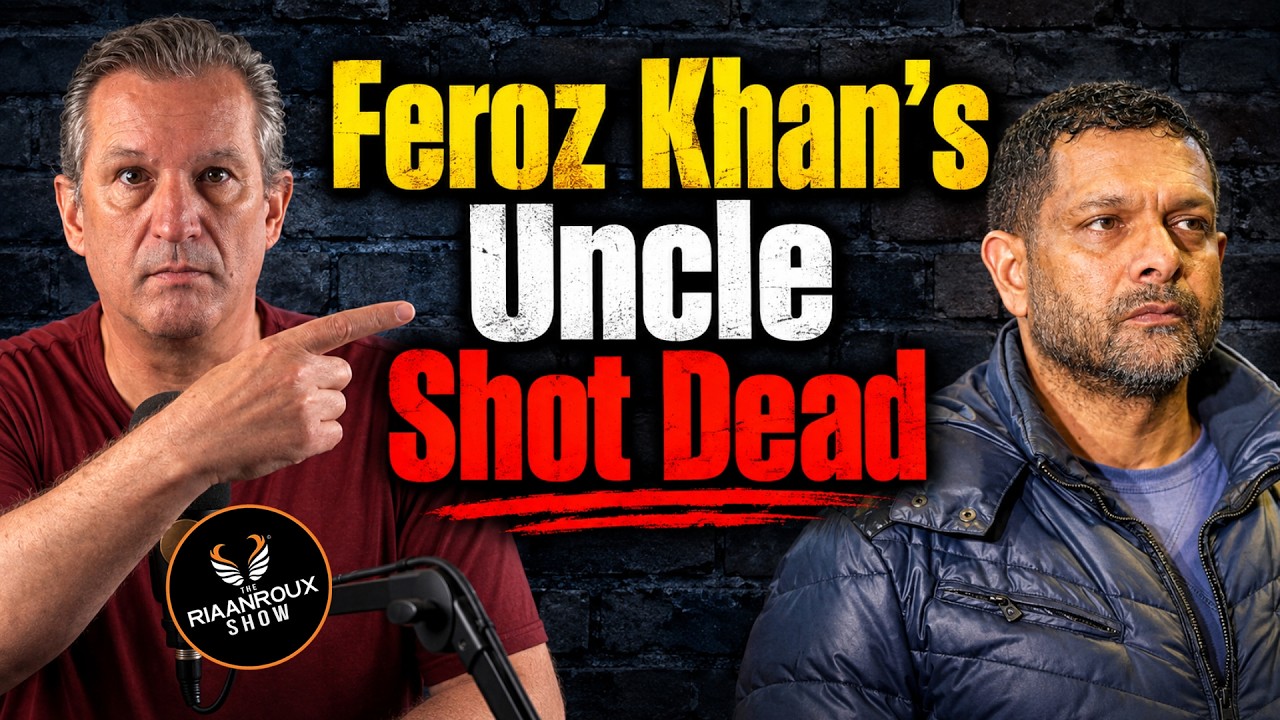
Feroz Khan has never publicly answered a question about the allegations against him, and every institution built to ask has now failed. Parliament’s Ad Hoc Committee never called him. His court challenges delayed the Madlanga Commission for weeks. The shooting stopped his testimony 48 hours before it was due. On Friday the commission will lead his evidence anyway, built on 300,000 WhatsApp messages his own lawyers say they cannot verify, while the question of why Parliament never called him remains unanswered by every party in the room.
On Wednesday, the day Major-General Feroz Khan was scheduled to testify before the Madlanga Commission of Inquiry, his advocates appeared without him. They told the commission he is unconscious and sedated at Netcare Milpark Hospital, with tubes in his mouth and abdomen, and submitted his J88 medical report, the formal document South African courts use to record injuries. They went further and invited the commissioners to visit the hospital to verify his condition themselves.
The J88 settles the medical question. The wound is real. It says nothing, however, about the circumstances that produced it. A staged shooting can produce a genuine wound, and the circumstances question remains with the Political Killings Task Team.
A Withdrawal, Not a Rejection
Widespread reporting has described the commission as rejecting Khan’s application to testify behind closed doors. The precise position is different, and the difference matters. Justice Mbuyiseli Madlanga signalled the application was fatally vague, questioning whether Khan sought protection for evidence beyond the 2021 Aeroton drug bust. Khan’s legal team withdrew the application before a formal ruling could be made.
A dismissal would have created a ruling to argue against. A withdrawal leaves the door open for a fresh, more detailed application. Madlanga’s critique effectively supplied the instructions for drafting one: identify which evidence requires protection, and why, item by item.
The new application, however, requires a supplementary affidavit from Khan, and Khan cannot give instructions. The commission now sits in a procedural deadlock its rules were not designed to resolve. It cannot perfect the application without Khan. It cannot compel an unconscious man. And its final report deadline of 31 August 2026 continues to count down.
The 26 Minutes
If information leaked, it leaked earlier than Sunday night’s filing.
Wednesday’s hearing also produced the detail that most coverage has missed. Madlanga asked Khan’s advocate what time Khan’s court papers were served on the commission on the night of the shooting. The answer was 11:04pm. Khan was shot at approximately 11:30pm.
That window of roughly 26 minutes carries significant weight for the theory that a leak from the commission triggered the shooting. Receiving a document, identifying a target, deploying gunmen and executing an ambush within that window is not logistically plausible. If information about Khan’s movements or intentions leaked, it leaked before the papers arrived, or it moved through a channel unrelated to the documents entirely.
Madlanga also rebuked Khan’s legal team over public statements implying a commission leak, warning them to be careful about imputing the commission’s integrity in media briefings. Advocate Zubair Khan conceded that his public statements about a potential leak were speculation based on impressions obtained from the family. The underlying concern may still warrant investigation, and the PKTT will make that determination, but the man who raised it publicly has acknowledged he had no evidence for it.
The Evidence Fight
The most consequential development of the day received the least attention. Khan’s legal team told the commission they have concerns about the authenticity of the WhatsApp messages and bank statements provided for his testimony, and that they require significantly more time to verify the documents.
Those messages are the foundation of the commission’s case involving Khan: the exchanges with EFF leader Julius Malema, the exchanges with businessman Mohammadh Sayed of Carnilinx, around 300,000 WhatsApp messages and 11,000 pages of financial records delivered to Khan’s team the weekend before he was due to testify.
His lawyers stopped short of calling the messages fake. Their position is that they have been unable to verify the messages are real. The distinction matters, because the commission’s evidence leaders have indicated they are ready to proceed with Khan’s evidence on Friday whether he is present or not. Evidence led in public while Khan is unconscious enters the record as fact. If his team later formally disputes its authenticity, the commission will have placed contested material into the public record of a report due in 8 weeks.
The Friday sitting also cuts against the staged shooting theory in a way few commentators have worked through. If Khan staged the shooting to avoid testifying, it has bought him nothing. The allegations enter the record with nobody present to answer them. Delay is the only thing his absence achieves, and delay only has value if something changes before 31 August.
The Parliament Question
The commission was never the first institution that tried to question Feroz Khan. Parliament was, and Parliament never got him into a chair either.
On Tuesday, MK Party MP Vusi Shongwe, who served as an alternate member of Parliament’s Ad Hoc Committee investigating the police corruption allegations raised by Lieutenant-General Nhlanhla Mkhwanazi, testified that it was difficult to get Khan called as a witness because of resistance inside the committee. Shongwe told the commission that Malema was the most vocal opponent of calling Khan. He further testified that Khan and close associates offered him R10 million in cash, a R2 million tender and a BMW to stop probing Khan during the parliamentary inquiry, describing it as a plot to implicate him and secure his silence.
The EFF has rejected the claim. EFF MP Leigh-Ann Mathys questioned how 1 member of a party could influence a committee of 10, saying decisions were taken collectively. The DA’s Glynnis Breytenbach agreed on the procedural point.
Both responses deserve scrutiny, and so does Shongwe. He is an MK Party MP whose testimony damages the EFF, a direct political rival, at a moment when Khan can respond to nothing. The commission will weigh that context, and so should the public. The EFF’s defence, meanwhile, is procedurally correct but rebuts a stronger claim than the one Shongwe made. Shongwe did not say Malema single-handedly blocked Khan’s appearance. He said Malema was the most vocal opponent of it. Whether Malema opposed calling Khan, and why, remains unanswered. So does the larger question that both the EFF and the DA have left untouched: why the most senior crime intelligence officer implicated in the Mkhwanazi allegations was never called by the committee established to investigate those allegations.
Why the Question Will Not Go Away
If Shongwe’s claim stood alone, it could be filed under political rivalry. It does not stand alone. The Nyatlo affidavit, released publicly by the commission after Khan abandoned his court challenges, describes an operational relationship between Khan and Malema running through Sayed. According to the affidavit, Khan sent Sayed a list of questions in June 2021 intended for the EFF to put to the Inspector-General of Intelligence in Parliament. The following day, Sayed forwarded messages to Khan containing formal parliamentary questions to the Minister of Police and the Inspector-General, with a message indicating they came from Malema.
The affidavit further alleges that Khan supplied Malema with the name and private home address of Anoosh Rooplal, the curator and main complainant in the VBS Mutual Bank matter. These allegations are untested, and Khan has answered none of them. But they are why the parliamentary protection question cannot be dismissed as opposition mischief. If the relationship ran in one direction, with a crime intelligence officer servicing a politician’s parliamentary work, the question of whether it ran in the other direction is not a conspiracy theory. It is the obvious next question.
The Pattern
Parliament’s Ad Hoc Committee investigated the Mkhwanazi allegations for months, and Khan was never called. He then fought the Madlanga Commission in court to keep his devices sealed and his testimony delayed, abandoning those challenges only on the Monday before his scheduled appearance. 48 hours before he was due in the chair, he was shot.
His in-camera application is withdrawn and cannot be refiled while he is unconscious. His evidence will be led on Friday with nobody there to answer for it. The commission that finally cornered him has 8 weeks left to finish its work. Whether the shooting was a hit or a performance, the outcome is identical: Feroz Khan has still never answered a question in public, and every institution that tried has been outlasted or interrupted.
South Africa gave a parliamentary committee and then a full judicial commission of inquiry the job of asking Feroz Khan hard questions, with the courts backing both. All of them have now failed to get 1 man into a witness chair. At some point the failure stops belonging to the man and starts belonging to the system that was built to reach him.